
There have been many great naval warfare ships over the history of the U.S. Navy. Many aircraft carriers went on to great distinction especially in the heroic battles that were part of World War II Naval warfare history. Names like the Lexington, the Saratoga, the Yorktown and the Enterprise fill the history books of great warships of World War 2 naval warfare. But the humble USS Langley has a long and distinguished career that included becoming the first ship to be retrofitted into an aircraft carrier that make the Langley worth of its own place in U.S. Naval history as well.
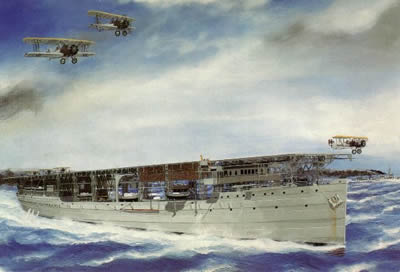
The Langley actually started out as the USS Jupiter when it was first commissioned in 1911. The Jupiter was a collier level ship and once it was put into action, it spent some time South America helping to establish a military presence during the difficult Veracruz crisis in 1914. But once that tension passed, the Jupiter got its first historic distinction of becoming the first ship to go through the Panama Canal from west to east. This was the beginning of some quiet accomplishments of this fine naval ship.
For the next decade, the Jupiter served primarily support functions mostly doing cargo duty and that was the service it provided during World War I. The Jupiter did see many ports performing support functions throughout Europe before returning to Norfolk Virgina to start a new life. On December 12, 1919, the life of “the Jupiter” came to an end when it was decommissioned. But for the vessel itself, this was only the beginning of its long and honorable career as a US naval warship.
It was in Norfolk that the former USS Jupiter underwent a transformation. Not only did it take on the name USS Langley in honor of Samuel Pierpont Langley, the ship underwent a dramatic transformation into the very first prototype of a U.S. naval aircraft carrier. The final configuration of the overhauled naval vessel was compete in 1922. Her very first commander in this new assignment was Kenneth Whiting and it was he who proudly put the Langley to work helping the navy develop the Navy’s powerful aviation warfare capabilities that would make such a huge difference in winning the war against the axis powers that lay ahead.
As the first aircraft carrier ever in what would become the backbone of the American naval aircraft infrastructure, the Langley racked up plenty of firsts. October 17, 1922, was the first time a pilot took off from the deck of a ship. Just nine days later Lieutenant Commander Godfrey de Courcelles Chevalier was the first pilot to land on an aircraft carrier deck when he set down on the deck of the Langley.
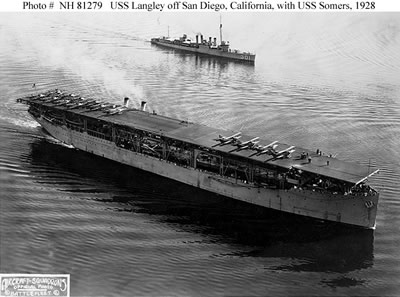
The Langley continued to be a valuable part of the US naval arsenal even after it was converted to a seaplane trader in 1936. Then on February 27th, 1942, while supporting antisubmarine maneuvers during World War II, The Langley was struck by an onslaught of nine Japanese bombers, which tragically damaged the ship critically causing it to sink in the line of duty. But it is worthwhile to take some time as we have done here today to look back on an important part of our US naval history at a ship that through many evolutions served its country honorably and ushered in the era of the US Navy aircraft carrier. And that historic ship was the USS Langley.