
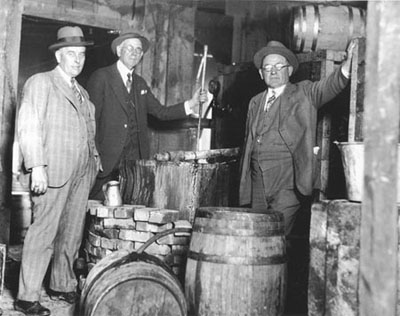
 What a time the 1920’s was, with the party atmosphere it was certainly a time of great criminal activity, with the prohibition laws in America and the world in an economic depression.
The people turned more and more to criminal activity, organized criminals such as the American mobsters and European crime syndicates thrived, most common people looked upon these organizations as heroes.
Criminals like Al Capone, Bonnie and Clyde and John Dillinger were headliners of the era.
Jobs were scarce and people needed to provide for their families, gangsterism was dangerous but provided an easy way to make money. When the American government passed the Eighteenth amendments outlawing alcohol, people who enjoyed a drink became criminal for doing so.
It was organized crime who supplied the booze. In January of 1920 the American government banned the sale and supply of alcohol, the government thought that this would curb crime and violence, prohibition did not achieve it’s goals, leading more toward higher crime rates and excessive violence.
Alcohol was seen as the devils advocate and banning the substance would help improve the quality of American lives. It caused an explosive growth in crime with more than double the amount of illegal bars and saloons operating than before prohibition.
The government set up the “Federal Prohibition Bureau” to police prohibition, this did not deter people and organized crime continued to be the main supplier of booze.
With a large coastline it was almost impossible to police with only five percent of alcohol ever being confiscated.
Bribing government officials was common, and people were increasingly crafty in the way they would hide alcohol such as hollowed out canes, false books and hip flasks. Violence on the streets increased as did unemployment.
The closure of all alcohol related industries was the main reason behind increased unemployment, hard working Americans suddenly were drinking a banned substance.
Police resources used to fight other crime were diverted to the prevention of alcohol consumption.The Criminal gangs that supplied the booze were ruthless with over inflated prices, often fighting each other for control of the trade. A whole black market was created around alcohol.
The quality of alcohol was poor and many people became sick, deaths from alcohol poisoning had risen 400%, people will argue that alcohol was less easily obtainable before prohibition since the bootlegging industry was so immense, you could purchase alcohol on almost any street in America, many home products were of poor quality however people were very inventive about the making of home alcohol.
Although a great idea in concept, prohibition was ultimately a failure; the public grew less respectful of the law. Drink driving increased and public drunkenness also increased.
After thirteen long years the government finally saw that prohibition was not working, it had infact created more of a problem than it solved, finally the government abolished the prohibition laws.
Crime decreased and the criminal element was taken out of the industry, organized crime in the 1920’s flourished in America because of prohibition and it did not stop there, after the prohibition era they simply went on to other markets with their new found wealth.
Had prohibition never happened organized crime syndicates may not have become so wealthy or powerful.
Further reading: Prohibition in the 1920’s
Nice article, thanks
good
very well done.
thanks for some accurate information(for once)
very good!:)
thx! rlly helped meh with a powerpoint in social studies!!
thanks it really helped me
this is very helpful for my research paper
really helped me with my research paper for literature.
Thanks helped me for my research paper.
thanks helped alot with a research paper for English
Thanks, this helped me on my research packet.
Thanks, definitely helped for my research paper. will be citing this
Just dropping by to show some love for the mafia. Shouts out to Al Capone. Check out my new video Pop That! Peace bitches. 😉
This helped me with my JRP for english!!!!!! Thank You!!!!!!! 🙂
So much info thank u
Loved the article it helped me with my social project
Great information-this article helped me with my English paper-thanks
MAN THIS IS SOME GOOD STUFF
Trying to link prohibition to crime rate requires a lot more thought than this author suggests. A rigorous statistical analysis requires one to untangle ALL of the factors at play – depression, expansion, war, social migrations, etc, etc…
creepy sick site.. helped me in history! swag out
Al capone is more swag then Niall Horan :zzz
This article is more about prohibition than organized crime in general :sigh:
[quote name=”jack frost”]creepy sick site.. helped me in history! swag out[/quote]
[quote name=”Drake”]Just dropping by to show some love for the mafia. Shouts out to Al Capone. Check out my new video Pop That! Peace bitches. ;-)[/quote]
This article is for research, not advertising a video or cussing because you think you’re cool.
Thanks a great deal ds rili helpd me
😡 [quote name=”pjangles”]thanks for some accurate information(for once)[/quote]
I agree.
😆 😆 😆 😆 Thank you soo much help me with my Prohibition research paper
thank you soo much help me with my History paper 😆 😀 🙂 8) 🙄
😛 I like this
This is entirely wrong and all these comments are fake. Bonnie and Clyde and John Dillinger were not at all organized, they were simply criminals. And how would the number of illegal bars have increased? There were no illegal bars prior to prohibition, because drinking wasnt illegal yet. So if it doubled, that means there were still 0 illegal bars, which is not true at all
[quote name=”Evan”]This is entirely wrong and all these comments are fake. Bonnie and Clyde and John Dillinger were not at all organized, they were simply criminals. And how would the number of illegal bars have increased? There were no illegal bars prior to prohibition, because drinking wasnt illegal yet. So if it doubled, that means there were still 0 illegal bars, which is not true at all[/quote]
Probably bars that operated without the license required to sell alcohol
Loved It Man